
Woke Up Puffy? Your Ultimate Guide to Reducing Facial Swelling
Why Facial Swelling Happens — and What You Can Actually Do About It
Reducing facial swelling starts with understanding what's causing it. Here's a quick-reference guide:
Cause Best First Step Typical Resolution Morning fluid retention Elevate head, cold compress A few hours Allergic reaction Antihistamine, avoid trigger 24-48 hours Dental infection See a dentist, antibiotics Days to weeks Injury or trauma Ice pack, head elevation 10-14 days Post-surgery Follow doctor's protocol 5-7 days or longer
Facial swelling — also called facial edema — happens when fluid builds up in the tissues of your face. It can be as harmless as waking up a little puffy after a salty dinner, or as serious as a sign of anaphylaxis, which is a life-threatening allergic reaction that needs immediate emergency care.
Most of the time, mild puffiness resolves on its own within hours. But persistent, painful, or rapidly spreading swelling is your body telling you something is wrong.
The cause matters — a lot. Swelling from a dental abscess is treated very differently than swelling from a broken nose or a rhinoplasty. Getting the right information quickly can speed up your recovery and help you avoid complications.
I'm Dr. Tariq Sawaqed, a cosmetic and implant dentist with over 20 years of experience helping patients in Colorado navigate dental-related facial swelling — from post-extraction puffiness to implant recovery. Reducing facial swelling after dental procedures is something I guide patients through every day, and this article brings together the best clinical evidence and practical home strategies to help you recover faster.
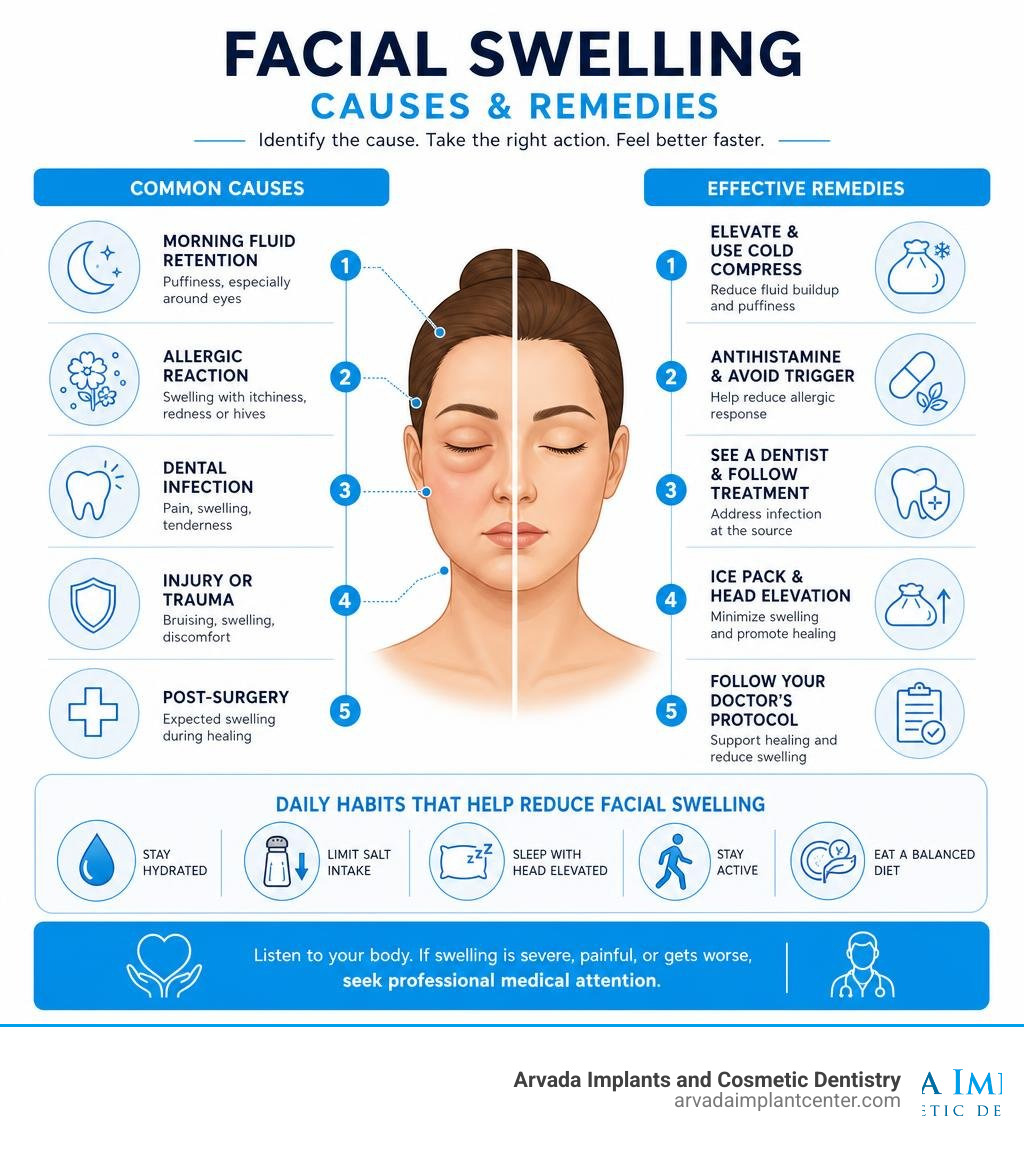
Common Causes and Timelines of Facial Edema
To understand how to get rid of a puffy face, we first have to look at the anatomy. The tissues of your face are highly vascularized and incredibly elastic. This elasticity makes your face a highly sensitive "early warning system" for your body's fluid balance and immune system.
When your body detects an injury, infection, or allergen, it triggers an inflammatory response. Blood vessels dilate, and fluid rushes to the interstitial spaces (the gaps between your cells) to deliver protective white blood cells. While this defense mechanism is brilliant, it leaves you looking incredibly puffy.
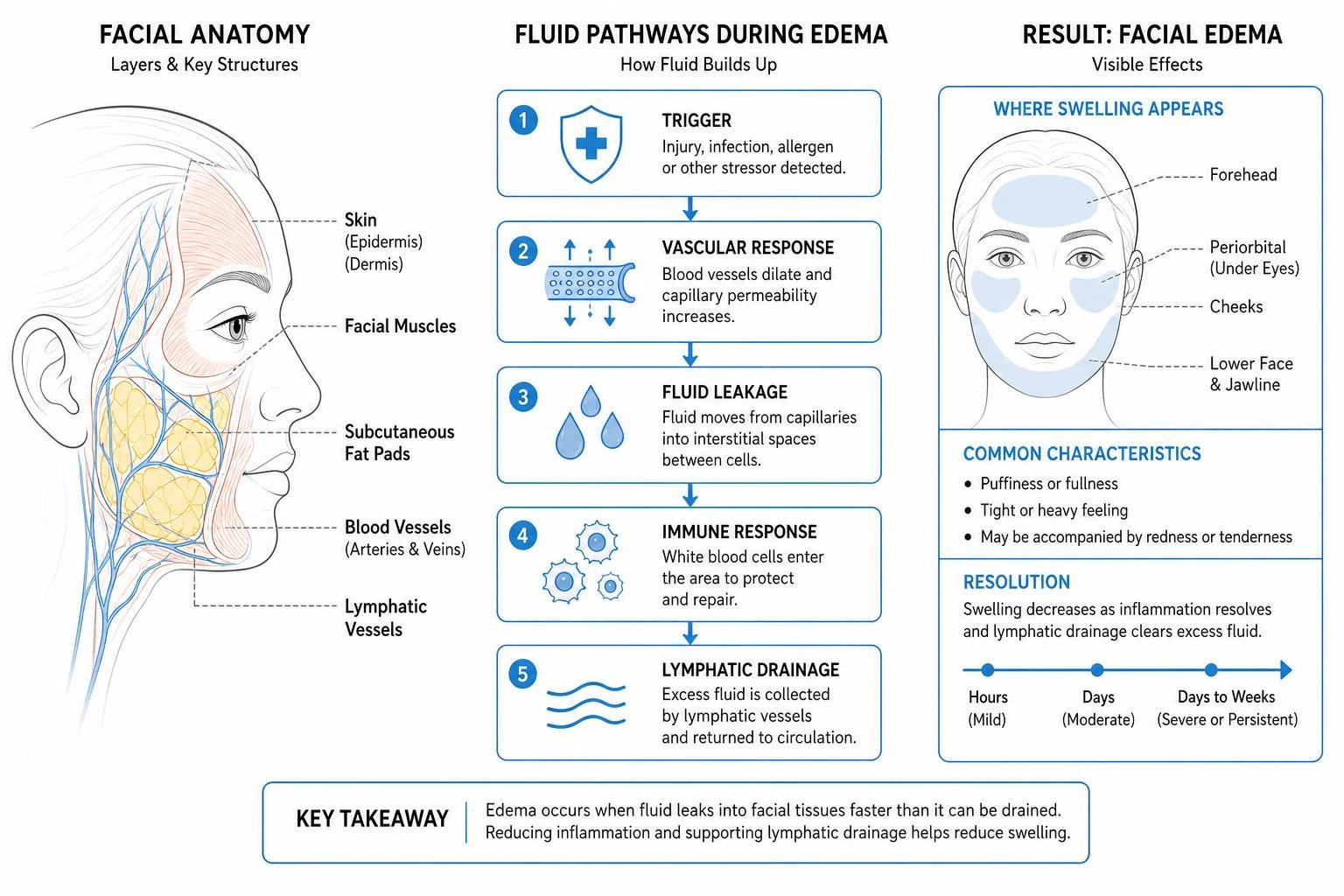
Let's break down the most common triggers behind this fluid buildup and what you can expect for recovery timelines.
Allergic Reactions and Angioedema
When you encounter an allergen — whether it is pollen, a specific food, or a new skincare product — your immune system releases histamine. This chemical increases capillary permeability, allowing fluid to leak easily into the surrounding facial tissues.
In mild cases, this causes localized hives or puffiness. However, it can also lead to angioedema, which is painless swelling deep beneath the skin, most commonly affecting the eyes, lips, and tongue. For a deeper look at systemic triggers, you can read Cleveland Clinic's guide on facial swelling causes.
Timeline: Mild allergic swelling typically resolves within 24 to 48 hours once the trigger is removed and antihistamines are administered.
Red Flag: If the swelling spreads to your throat or tongue, or is accompanied by breathing difficulties, it is anaphylaxis. This requires immediate emergency treatment with epinephrine.
Trauma, Injuries, and Broken Bones
A physical blow to the face — whether from sports, an accidental fall, or a car accident — causes direct tissue bruising and trauma. This ruptures tiny blood vessels, leading to ecchymosis (bruising) and rapid localized swelling.
For instance, a broken nose is a common facial injury that causes significant periorbital (around the eyes) swelling.
Timeline: Swelling from a broken nose or facial trauma usually peaks within 48 hours. It takes about 10 to 14 days for the swelling to subside significantly, while the underlying bone can take up to 3 weeks or more to heal fully.
First Aid: Applying a cold compress with gentle, even pressure is critical in the first 24 hours to restrict blood flow and limit fluid accumulation.
Dental Infections and Post-Extraction Swelling
As dental specialists here in Arvada, Colorado, this is our area of expertise. Swelling on one side of your face, especially around the jawline or cheek, is a classic indicator of a dental emergency. A tooth abscess occurs when bacteria invade the dental pulp, spreading the infection to the surrounding bone and soft tissues. If left untreated, a dental abscess can progress into facial cellulitis — a serious, fast-spreading bacterial skin infection.
Additionally, some swelling is a completely normal part of the healing process after oral surgery. Whether you are navigating tooth extraction aftercare or keeping track of your dental implant recovery timeline, your body treats surgical incisions as controlled trauma.
Timeline: Post-surgical swelling after a dental implant or tooth extraction typically peaks around day 3 (approximately 48 to 72 hours post-op) before gradually declining. It should resolve within a week.
The Danger of Ignoring It: Dental emergencies account for nearly 2 million ER visits annually in the United States. Many of these could be avoided with early intervention at a dental office. If you notice swelling accompanied by a throbbing toothache, a foul taste, or a fever, do not wait.
Clinical Interventions for Reducing Facial Swelling
When home remedies are not enough, modern medicine offers highly effective, evidence-based treatments to bring down swelling, particularly after surgical procedures.

Corticosteroid Protocols in Facial Plastic Surgery
Corticosteroids are powerful anti-inflammatory medications. They work by inhibiting lymphocyte migration, preventing capillary dilation, and reducing the overall inflammatory cascade. In both reconstructive and aesthetic facial surgeries, they are widely used to accelerate patient recovery.
The evidence for their efficacy is strong:
Rhinoplasty Recovery: A Cochrane systematic review on perioperative corticosteroids analyzed clinical trials and found that a single perioperative dose of 10 mg of dexamethasone significantly decreased edema and ecchymosis (bruising) during the first two days following rhinoplasty surgery.
Sustained Recovery: A broader meta-analysis on pre- and postoperative corticosteroids confirmed that administering steroids preoperatively reduces early periorbital edema. Furthermore, adding postoperative doses helps maintain this swelling reduction beyond the first 48 hours.
High-Dose Protocols: For more extensive facial plastic surgeries, studies have shown that high doses of methylprednisolone (over 250 mg) successfully decrease both swelling and bruising from the first day through the seventh postoperative day.
Safety Concerns and Side Effects of Steroid Therapy
While corticosteroids are incredibly effective, they are not a one-size-fits-all solution. Because they suppress the immune system's inflammatory response, they must be used with careful medical supervision. Potential risks of high-dose or prolonged steroid use include:
Delayed wound healing
Increased risk of surgical site infections
Elevated blood pressure and blood sugar levels
We always evaluate our Colorado patients' medical histories thoroughly before recommending or prescribing steroid therapies to ensure their recovery is both fast and safe.
Evidence-Based Home Remedies and Lifestyle Adjustments
If your swelling is not from a medical emergency or a major surgery, or if you are looking for ways to support your clinical recovery at home, these non-pharmacological strategies work wonders.

Cold Therapy and Head Elevation for Reducing Facial Swelling
The simplest physical therapies are often the most effective.
Cold Therapy: Applying ice to a swollen area causes vasoconstriction (narrowing of blood vessels), which instantly reduces fluid leakage into tissues. Use an ice pack or a bag of frozen peas (which molds perfectly to the contours of your face) wrapped in a clean, thin towel to protect your skin. Apply it for 15 to 20 minutes every hour during the first 48 hours.
Head Elevation: Gravity is your best friend when reducing facial swelling. When you lie flat, blood and lymphatic fluids pool in your face. By practicing elevated head sleeping — using an extra pillow or a wedge pillow to keep your head elevated at a 30-degree angle — you promote natural lymphatic drainage.
Dietary Swaps, Hydration, and Bromelain Supplements
What you put into your body plays a massive role in how much fluid your face retains.
Slash the Sodium: Excess sodium pulls water into your blood vessels and tissues, causing immediate bloating. Aim to limit your sodium intake to no more than 2,000 milligrams per day. Avoid highly processed foods, ramen, and soy sauce, especially in the evening.
Drink More Water: It sounds counterintuitive, but dehydration actually causes your cells to hold onto water, resulting in a puffy face. Drinking plenty of water (around 11.5 cups daily for women and 15.5 cups for men) flushes out excess sodium and waste.
Harness the Power of Bromelain: Bromelain is a natural proteolytic enzyme found in pineapples. A clinical study on bromelain and coumarin involving 100 maxillofacial trauma patients revealed that a daily intake of 700 mg of bromelain significantly reduced post-surgical facial edema and pain. Patients taking the supplement required a median of only 2 days of NSAID pain relievers compared to 4 days in the control group!
Eat Recovery-Promoting Foods: Focus on eating the best recovery foods — such as low-sugar yogurt with live cultures, leafy greens, and anti-inflammatory whole grains like quinoa. Adding a magnesium supplement (200 to 400 mg daily, after consulting your doctor) can also help balance sodium levels and reduce fluid retention.
Frequently Asked Questions about Facial Puffiness
We hear many questions from our patients in Arvada about managing morning puffiness and surgical recovery. Here are our expert answers to the most common queries.
What is the fastest way to reduce facial swelling?
The fastest way to reduce swelling is immediate cold therapy. Splash your face with ice-cold water or apply a cold compress wrapped in a towel for 15 minutes. This triggers rapid vasoconstriction, instantly reducing blood flow and fluid accumulation. Pair this with drinking a large glass of water and doing some light movement, like a morning walk, to kickstart your lymphatic drainage. For more quick-relief ideas, you can refer to the Medical News Today guide on reducing facial swelling.
When is a swollen face considered a medical emergency?
Facial swelling is a medical emergency and requires immediate ER attention if you experience any of the following "red flag" symptoms:
Difficulty breathing, swallowing, or talking
Swelling of the tongue, lips, or throat (signs of anaphylaxis)
Rapidly spreading swelling, especially if accompanied by a high fever and severe pain (signs of a spreading infection like cellulitis)
Swelling around the eyes that restricts vision or causes severe headaches
How does sleep position affect morning facial puffiness?
When you sleep flat on your stomach or side, gravity pulls fluid down, causing it to pool in your facial tissues overnight. Additionally, sleeping with poor neck alignment can create muscle tension that physically blocks lymphatic drainage under your chin. Sleeping on your back with your head elevated on an extra pillow is the easiest way to prevent morning puffiness.
Conclusion
Whether you woke up with minor morning puffiness or are recovering from a major dental procedure, reducing facial swelling comes down to understanding the cause and acting quickly. By combining simple home strategies like ice and head elevation with clinically proven therapies like bromelain or prescribed anti-inflammatories, you can dramatically speed up your recovery time.
At Arvada Implants and Cosmetic Dentistry, we pride ourselves on providing affordable, personalized dental treatments right here in Arvada, Colorado. We combine state-of-the-art technology with custom lab creations to design unique, healthy smiles. If you are preparing for an upcoming procedure or need detailed post-operative guidance, please read our step-by-step tooth extraction home care instructions.
We are always here to support your journey to a healthy, confident, and puffiness-free smile!